Gear Up For Greatness
Dates
February 6-7, 2026
Location
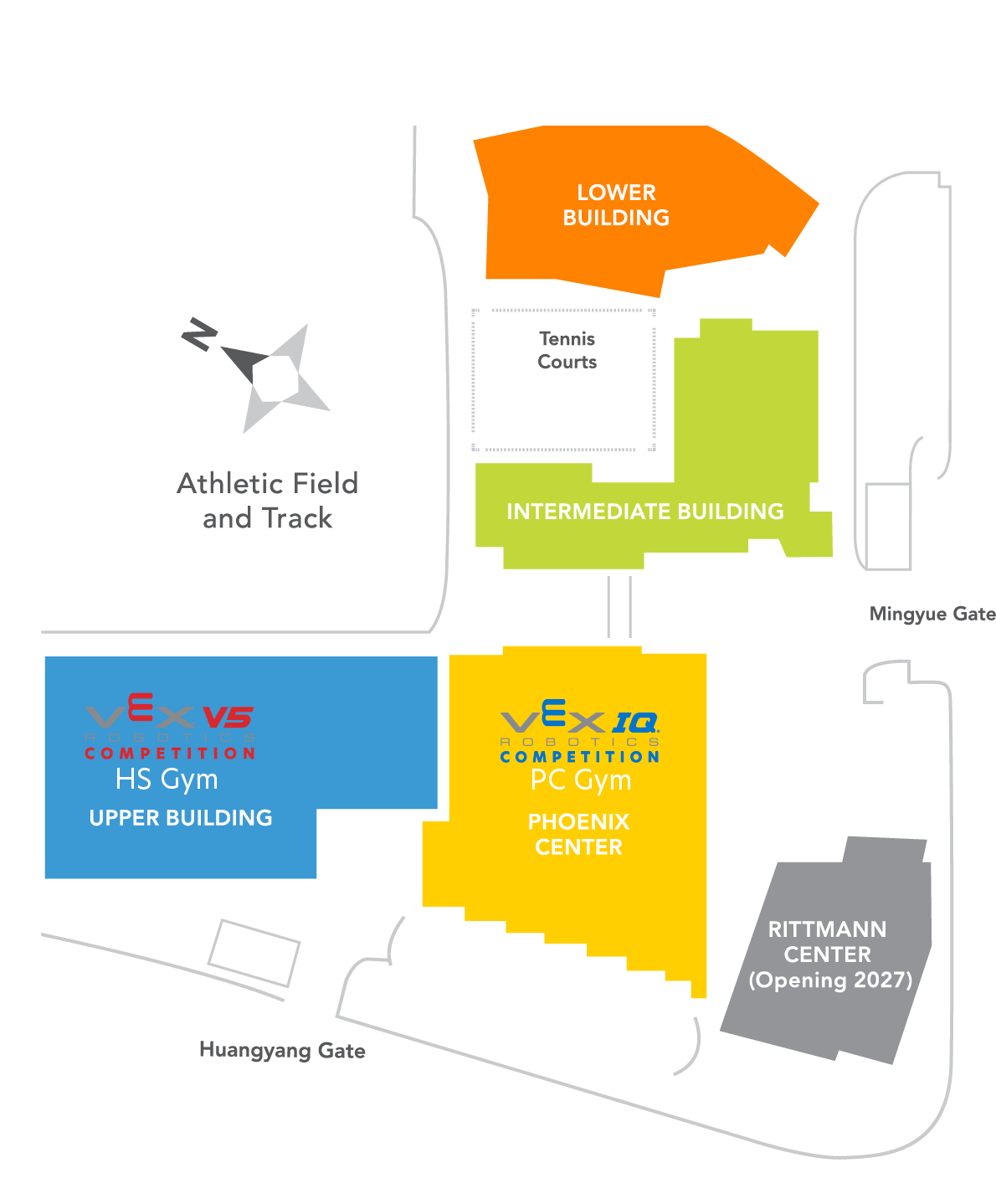
Concordia Shanghai
WiFi: CISS_Events
Pass: phoenix2026
We are thrilled to host the ACAMIS National VEX Robotics Finals for the 2025-2026 season. This event brings together the top international schools in China, continuing our tradition of promoting excellence in STEM education, collaboration, and engineering design.
Public Access
Open to schools from 7:00 AM.
Open to the public from 9:00 AM.
Teams will play 1 Practice Match and 8 Qualifying Matches.
Teams must pay strict attention to the queueing schedule. If a match is scheduled to begin and the referee has finished the previous match, the match will start without absent teams, and they will be marked as a "No-Show."
Physical Notebooks NOT submitted online by the February 2nd, 2026 deadline will not be accepted.
Public access to the venue closes strictly at 7:00 PM.
Skills closes at 12:00 PM
Skills closes at 11:30 AM
Field Dedications
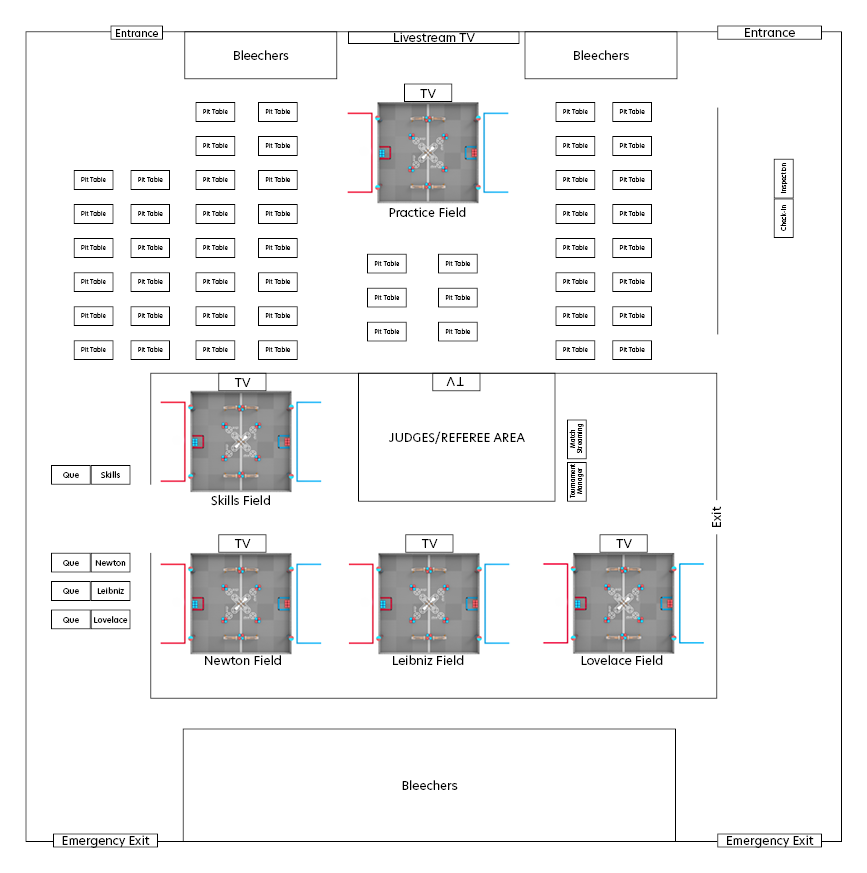
Ada Lovelace was an English mathematician and writer, best known for her work on Charles Babbage's early mechanical general-purpose computer, the Analytical Engine. She is often considered the first computer programmer for her development of an algorithm for the machine, making her a pioneer in the field of computer science.
Isaac Newton was an English mathematician, physicist, and astronomer, widely recognized as one of the most influential scientists of all time. He made foundational contributions to calculus (independently co-developed with Leibniz), formulated the laws of motion and universal gravitation, and made significant advances in optics.
Gottfried Wilhelm Leibniz was a German mathematician, philosopher, and polymath. He is best known for independently developing calculus alongside Newton, creating a notation system still used today. Leibniz also made significant contributions to logic, binary number systems, and metaphysics.
Field Dedications
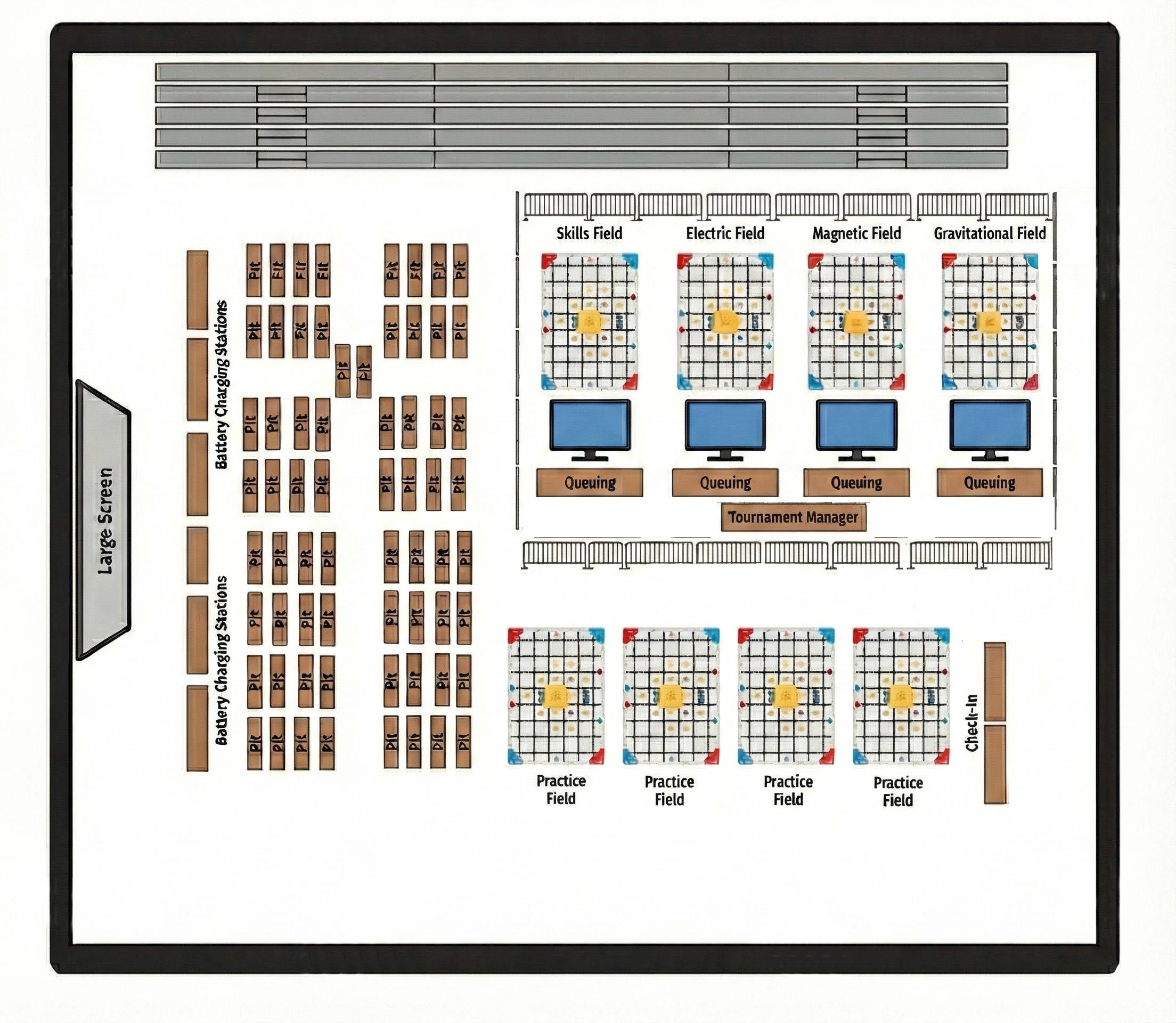
A gravitational field is a model used to explain the influence that a massive body extends into the space around itself, producing a force on another massive body. It is the force that gives weight to physical objects and causes planets to orbit stars.
An electric field is a physical field that surrounds electrically charged particles. It exerts force on all other charged particles in the field, either attracting or repelling them. It is a fundamental concept in understanding electricity and chemistry.
A magnetic field is a vector field that describes the magnetic influence on moving electric charges, electric currents, and magnetic materials. It is the principle behind electric motors, generators, and the Earth's protective magnetosphere.
Team Interviews: Conducted in-person at the event.
Engineering Notebooks: Submitted digitally for evaluation via the "My Account" panel on RobotEvents.
Teams may choose to bring physical notebooks to the event for reference during the interview, but are not required to do so.
Deadline Warning
Submit all documentation by February 2nd, 2026.
All teams must adhere to the REC Foundation Student-Centered Policy regarding robot design, build, and programming.
Restricted Access
As a National level ACAMIS competitions, coaches are NOT permitted into the pits or practice areas. These areas will be patrolled by volunteers in event branded t-shirts. Pits are arranged to allow coaches line-of-sight to students, but physical access is restricted to students only.
Official Practice Fields (The Queue System)
Overnight Storage
To ensure fairness and student well-being, robots must NOT leave the venue overnight. While we encourage host schools to provide extra time for repairs during the day, this policy guarantees that students do not work on robots into the early hours in their hotels.
Non-ACAMIS School Registration
International schools not affiliated with ACAMIS will be placed on a waiting list upon application. If spots remain after the registration deadline, non-ACAMIS schools may be invited from this list.
Strict Policy: No Private Organizations
The striking branding you see for the 2026 National ACAMIS VEX Tournament wasn't outsourced to an agency—it was forged right here at Concordia.
In a collaboration with the AL Graphic Design course, students were challenged to treat the tournament organizers as clients. True to the spirit of Concordia’s Applied Learning program, which prioritizes experiential learning and authentic application, the students in this course stepped out of the classroom and into the role of a professional design firm. Working from a strict design brief, the student-designers engaged in a multi-week iterative process, meeting with organizers to refine their concepts just as they would with real-world clients.
The students succeeded in transforming their graphic design knowledge into professional-grade assets. By analyzing and deconstructing VEX game elements and reassembling them into cohesive visual systems, they captured the energy of robotics. One standout design emerged when one student found a way to merge the VEX field elements with traditional Chinese lattice patterns, bridging the gap between technology and tradition, weaving VEX elements into lattice patterns to pay homage to our host country.
Thank you to the AL Graphic Design cohort for bringing the 2026 tournament to life with such creativity and skill.